
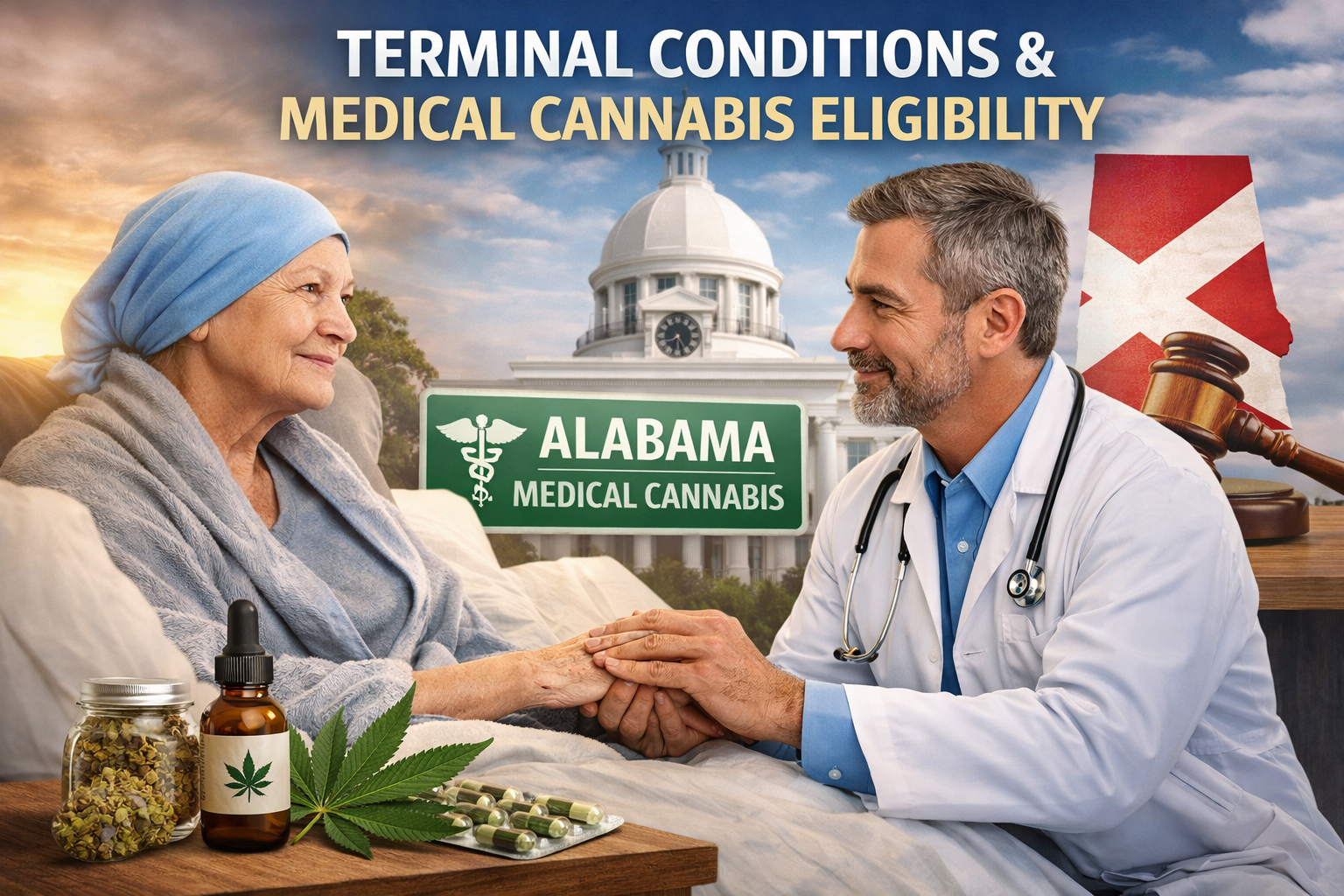
Terminal Conditions and Medical Cannabis Eligibility in Alabama
Medical cannabis has become an important treatment option for patients facing serious and life-limiting illnesses. In Alabama, medical marijuana is legal for patients who meet specific eligibility criteria, including those diagnosed with terminal conditions. For individuals dealing with end-of-life symptoms such as chronic pain, nausea, appetite loss, anxiety, or muscle spasms, medical cannabis may offer meaningful symptom relief when traditional treatments fall short.
Understanding how terminal conditions qualify under Alabama’s medical cannabis program can help patients and caregivers make informed decisions while navigating the state’s regulatory framework.
What Is Considered a Terminal Condition in Alabama?
A terminal condition is generally defined as an illness or disease expected to result in death within six months or less. This definition is consistent with hospice care standards and is recognized under Alabama’s medical cannabis law. Terminal diagnoses often involve severe symptoms that can significantly impact comfort and quality of life, which is why the state includes terminal illness as a qualifying condition for medical cannabis treatment.
According to the Alabama Medical Cannabis Commission (AMCC), terminal illness is explicitly listed among the conditions eligible for medical cannabis certification. The full list of qualifying conditions can be found directly on the AMCC’s official website: https://amcc.alabama.gov/faq/what-conditions-qualify-for-medical-cannabis-treatment/
This designation allows licensed physicians to recommend medical cannabis when they determine it may provide therapeutic or palliative benefits to patients nearing the end of life.
Overview of Alabama’s Medical Cannabis Program
Alabama legalized medical cannabis in 2021 with the passage of the Darren Wesley “Ato” Hall Compassion Act. This law established a tightly regulated system for recommending, producing, and dispensing medical cannabis across the state. Unlike some states, Alabama does not permit smoking or raw flower products. Approved forms of medical cannabis include tablets, capsules, oils, tinctures, topical gels, patches, and suppositories.
Patients must meet several requirements to participate in the program, including Alabama residency, a qualifying medical condition, and certification from a licensed physician registered with the state. The Alabama Medical Cannabis Commission oversees patient registration, licensing, and compliance. Additional program details and updates are available through the AMCC’s FAQ portal: https://amcc.alabama.gov/frequently-asked-questions/
While the program has experienced delays due to legal challenges and licensing issues, recent approvals indicate that dispensary operations are expected to expand as the program moves toward full implementation.
Terminal Illness as a Qualifying Medical Condition
Alabama’s list of qualifying conditions includes a range of serious medical diagnoses and symptoms, such as cancer-related pain, neurological disorders, chronic pain, and severe spasticity. Terminal illness stands out as a particularly important category because it focuses on palliative care rather than long-term disease management.
Terminal conditions may include, but are not limited to, late-stage cancer, end-stage organ failure, advanced neurodegenerative diseases, or other medically documented illnesses with a limited life expectancy. Physicians are given discretion to determine eligibility based on clinical evaluation and supporting medical records.
By including terminal illness as a qualifying condition, Alabama’s medical cannabis program aims to provide compassionate access to symptom-relief options for patients in their final stages of care.
How Medical Cannabis May Help Patients with Terminal Conditions
For patients diagnosed with terminal illnesses, treatment priorities often shift toward comfort, dignity, and quality of life. Medical cannabis may help address several common symptoms associated with end-of-life care.
Pain Relief
Chronic and severe pain is one of the most common symptoms experienced by terminally ill patients. Medical cannabis has been shown to help some patients manage pain when conventional medications, including opioids, are ineffective or cause intolerable side effects.
Nausea and Appetite Loss
Patients undergoing chemotherapy or dealing with advanced illness frequently experience nausea, vomiting, and loss of appetite. Cannabis-based medications may help stimulate appetite and reduce nausea, supporting nutritional intake and overall comfort.
Anxiety and Sleep Disturbances
A terminal diagnosis can bring emotional distress, anxiety, and insomnia. Some patients report improved sleep and reduced anxiety symptoms when using physician-recommended cannabis products as part of their care plan.
Muscle Spasms and Neurological Symptoms
Terminal conditions involving the nervous system, such as ALS or late-stage neurological diseases, may cause muscle stiffness, spasms, and loss of mobility. Certain cannabis formulations may help reduce muscle spasticity and discomfort.
Physician Certification and Medical Oversight
To qualify for medical cannabis in Alabama, patients with terminal conditions must be evaluated by a licensed physician who is registered with the Alabama Board of Medical Examiners. The physician must determine that the patient has a qualifying condition and that medical cannabis may provide therapeutic benefit.
Physicians are required to review the patient’s medical history, confirm the terminal diagnosis, and document prior treatments. Information about physician registration and compliance requirements is available through the Alabama Board of Medical Examiners: https://www.albme.gov/licensing/md-do/registrations/medical-cannabis
Once certified, patients are entered into the state registry, allowing them to legally purchase approved medical cannabis products from licensed dispensaries when available.
Special Considerations for Terminal Patients
Alabama law provides additional flexibility for patients diagnosed with terminal illnesses. In certain cases, physicians may recommend adjusted dosing limits for terminal patients compared to those with non-terminal conditions. These decisions are carefully regulated and monitored to ensure patient safety and compliance with state law.
Caregivers may also play a role in assisting terminal patients with registration, transportation, and medication administration, depending on the patient’s condition and needs.
Current Status and Future of the Program
Although Alabama’s medical cannabis law is in place, the program’s rollout has been gradual. Licensing delays and legal disputes have slowed dispensary openings, but progress continues. According to recent reporting by AP News, the Alabama Medical Cannabis Commission has resumed issuing licenses, signaling movement toward broader patient access: https://apnews.com/article/809db87aa13fd1167b73f0e1eedfa13c
As the program becomes fully operational, patients with terminal conditions are expected to gain more consistent access to regulated medical cannabis products across the state.
Final Thoughts
The inclusion of terminal conditions as a qualifying category under Alabama’s medical cannabis law reflects a compassionate approach to end-of-life care. For patients facing serious, life-limiting illnesses, medical cannabis may provide relief from pain, nausea, anxiety, and other debilitating symptoms, helping improve comfort and quality of life during an incredibly challenging time.
Patients and caregivers are encouraged to stay informed through official state resources and consult licensed medical professionals to determine whether medical cannabis is an appropriate option within Alabama’s legal framework.