
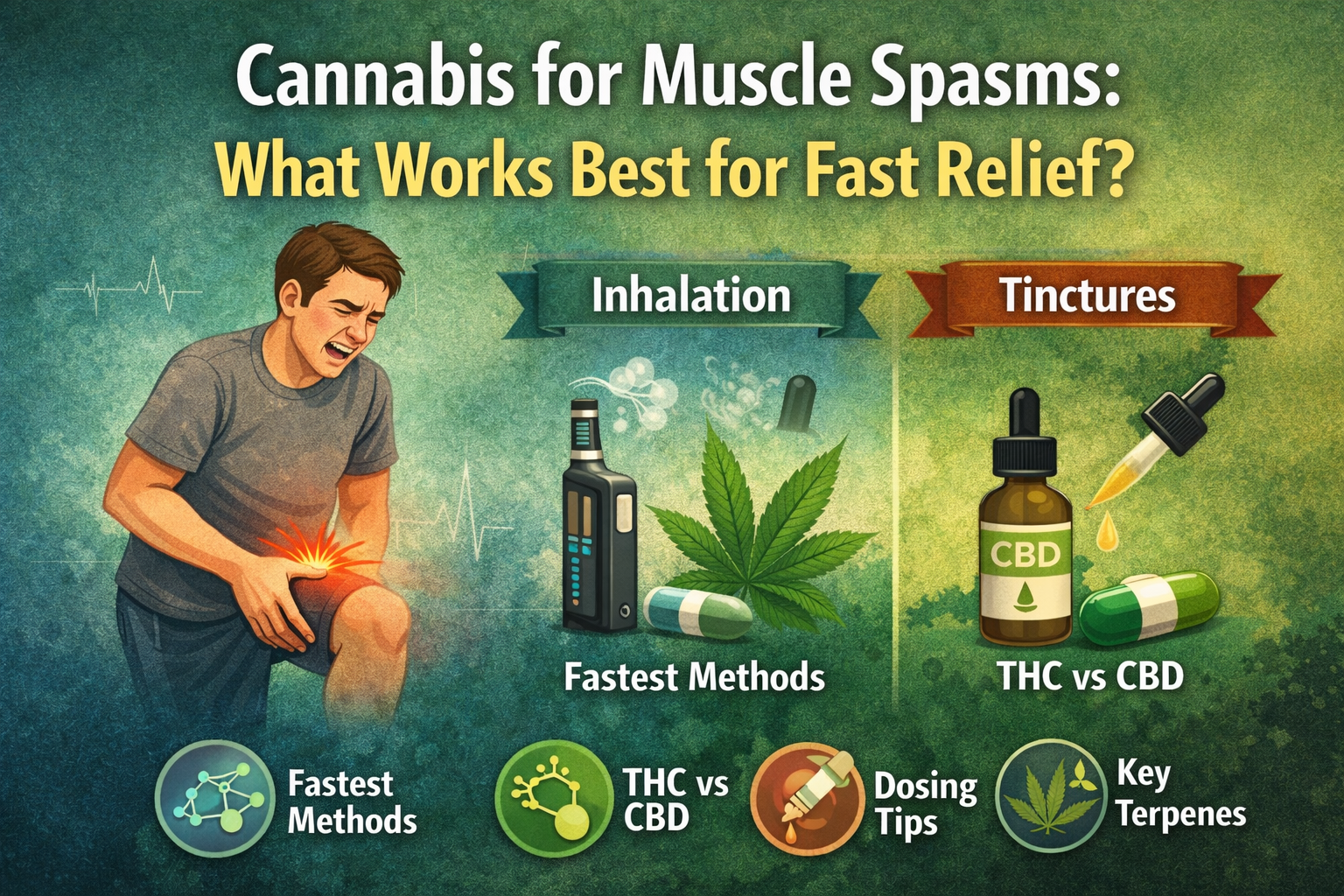
Cannabis for Muscle Spasms: What Works Best for Fast Relief?
Muscle spasms can be painful, disruptive, and exhausting. For some people, they’re an occasional nuisance. For others—especially those with neurological or chronic conditions—they’re a daily struggle that affects sleep, mobility, and quality of life.
Medical cannabis has gained attention as a potential option for fast relief from muscle spasms, particularly when traditional medications cause unwanted side effects or provide limited benefit. But cannabis isn’t one-size-fits-all. The type of product, dose, and method of use all matter.
This guide explains how cannabis works for muscle spasms, what products work best for fast relief, and when it may not be the right option.
What Causes Muscle Spasms?
Muscle spasms are sudden, involuntary muscle contractions. They can range from mild twitching to severe, painful cramping. Common causes include:
- Multiple sclerosis (MS)
- Spinal cord injuries
- Parkinson’s disease
- Nerve damage (neuropathy)
- Electrolyte imbalances
- Overuse, dehydration, or muscle fatigue
- Certain medications
According to the Cleveland Clinic, chronic muscle spasms are often linked to nerve signaling problems rather than the muscle itself.
👉 Source: Cleveland Clinic – Muscle Spasms
This is where cannabis may help—by influencing how nerves communicate with muscles.
How Cannabis Helps With Muscle Spasms
Cannabis works through the endocannabinoid system (ECS), which plays a role in regulating muscle tone, nerve signaling, inflammation, and pain perception.
THC and CBD interact with cannabinoid receptors in the brain and spinal cord, helping to:
- Reduce abnormal nerve firing
- Relax overactive muscles
- Decrease inflammation
- Improve sleep disrupted by spasms
Research published by the National Institutes of Health (NIH) suggests cannabinoids may reduce spasticity by modulating motor neuron activity in the central nervous system.
👉 Source: NIH – Cannabinoids and Spasticity
Conditions Where Cannabis Works Best for Muscle Spasms
Cannabis appears most effective for neurological-related spasms, including:
Multiple Sclerosis (MS)
MS-related spasticity is one of the most studied uses of medical cannabis. Several clinical trials show cannabinoids can reduce muscle stiffness, frequency of spasms, and pain.
A review published in PubMed found that cannabis-based medicines provided moderate improvement in MS-related spasticity symptoms.
👉 Source: PubMed – Cannabis for MS Spasticity
Spinal Cord Injury & Nerve Damage
When spasms are caused by nerve signaling dysfunction, cannabis may help calm excessive nerve activity that triggers involuntary contractions.
Patients often report improved comfort, reduced nighttime spasms, and better sleep quality.
Chronic Pain With Muscle Tightness
Conditions like fibromyalgia or chronic lower back pain may involve muscle guarding and tension. Cannabis may help by reducing pain signals and allowing muscles to relax indirectly.
What Cannabis Products Work Best for Fast Relief?
Not all cannabis products act at the same speed. For muscle spasms, onset time is critical, especially during sudden flare-ups.
1. Inhalation (Fastest Relief)
- Vaporized flower or oil
- Onset: 2–10 minutes
- Best for: Sudden or severe spasms
Inhalation delivers cannabinoids quickly into the bloodstream, making it the fastest option for relief. However, dosing should be kept low to avoid dizziness or anxiety.
2. Sublingual Tinctures (Balanced Speed)
- Placed under the tongue
- Onset: 15–45 minutes
- Best for: Planned symptom control
Tinctures allow for more precise dosing and longer-lasting relief than inhalation, without the delayed unpredictability of edibles.
3. Topicals (Localized Relief)
- Creams, balms, and lotions
- Onset: 15–30 minutes
- Best for: Localized muscle spasms
Topicals do not produce psychoactive effects and may help reduce localized muscle tension, though they’re less effective for neurological spasticity.
4. Edibles & Capsules (Slower, Not Ideal for Fast Relief)
- Onset: 1–2 hours
- Best for: Long-term symptom control
Edibles are generally not recommended for fast relief due to delayed onset and dosing unpredictability.
THC vs CBD for Muscle Spasms
THC
- Strong muscle-relaxant effects
- Helps reduce nerve-driven spasms
- Can cause dizziness or anxiety at higher doses
CBD
- Mild muscle relaxation
- Reduces inflammation
- May reduce THC-related side effects
💡 Best approach for most patients: A balanced THC:CBD product, which provides muscle relaxation with better tolerability.
Terpenes That May Help Muscle Spasms
Some cannabis terpenes may enhance muscle relaxation:
- Myrcene – Sedating, muscle-relaxing
- Linalool – Calming, anti-spasm potential
- Beta-caryophyllene – Anti-inflammatory
Products rich in these terpenes may offer added benefit for spasticity.
When Cannabis May NOT Be the Best Option
Cannabis may be less effective or inappropriate if:
- Spasms are caused by dehydration or electrolyte imbalance
- Anxiety worsens symptoms
- High doses impair coordination or balance
- There’s a history of sensitivity to THC
The Centers for Disease Control and Prevention (CDC) cautions that cannabis can affect coordination and reaction time, which may be a concern for patients with mobility issues.
Practical Tips for Safer, Faster Relief
- Start with low THC (2.5–5 mg or less)
- Use inhalation or tinctures for faster onset
- Avoid mixing cannabis with alcohol
- Stay hydrated
- Track which products reduce spasms without side effects
When to Talk to a Medical Professional
You should consult a qualified medical provider if:
- Muscle spasms are worsening or spreading
- You experience weakness, numbness, or loss of control
- Cannabis causes significant side effects
- You’re combining cannabis with muscle relaxants or sedatives
Medical guidance helps ensure cannabis is used safely and effectively, especially for neurological conditions.
Final Thoughts: Cannabis Can Help—When Used Correctly
Cannabis can be an effective option for muscle spasms, particularly those caused by neurological conditions like MS or nerve damage. For fast relief, inhalation and tinctures tend to work best, while balanced THC:CBD formulations improve tolerability.
As with any treatment, success depends on the right product, the right dose, and the right guidance.
If muscle spasms are affecting your daily life, a personalized medical cannabis plan—not trial and error—offers the best path forward.