
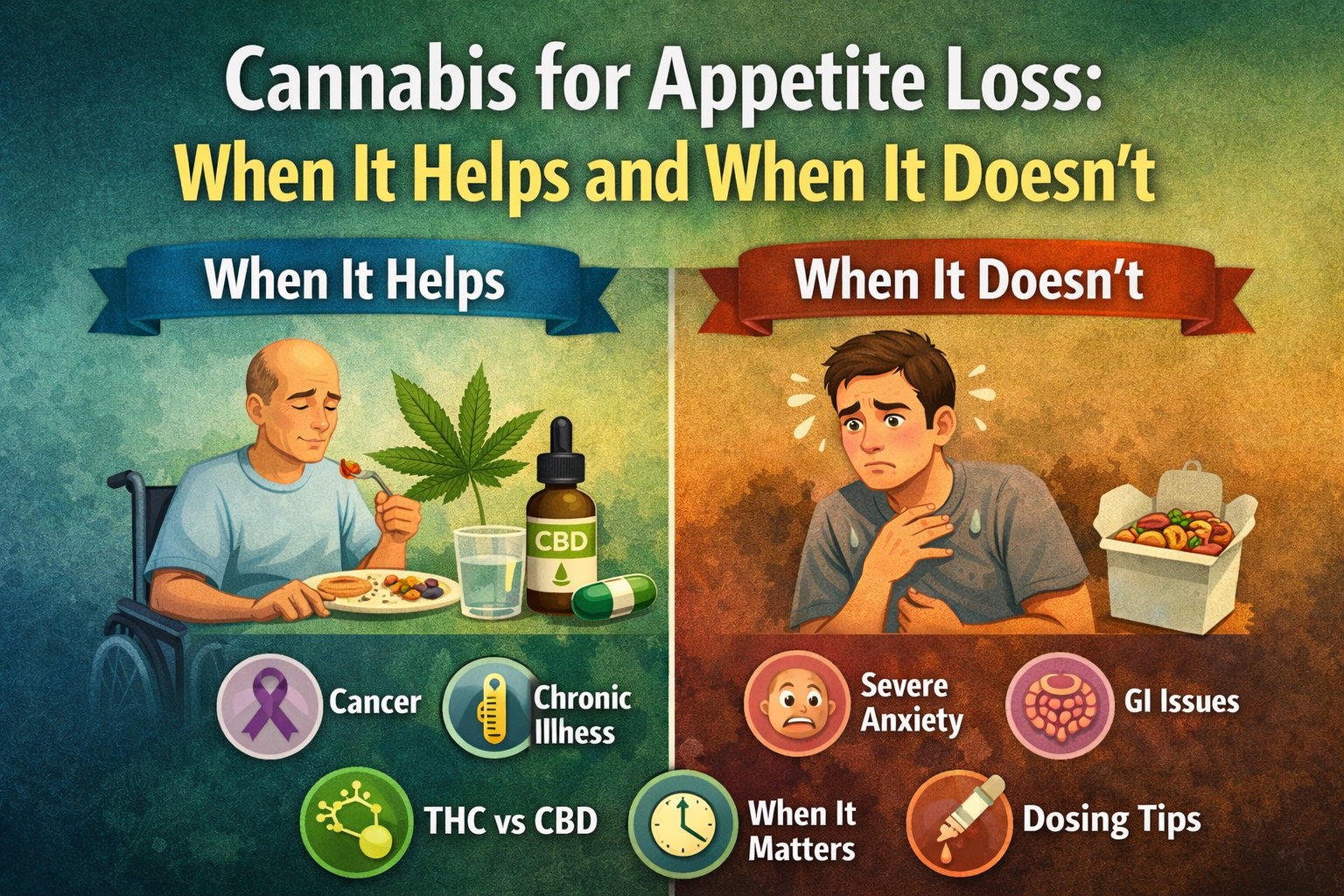
Cannabis for Appetite Loss: When It Helps and When It Doesn’t
Loss of appetite is more than just skipping meals. For many patients, it leads to unintended weight loss, low energy, nutrient deficiencies, and slower recovery from illness. Appetite loss is common in people dealing with cancer, chronic pain, GI disorders, anxiety, depression, and certain medications.
Medical cannabis is often discussed as a potential solution—but it doesn’t work the same for everyone. In some cases, it can significantly improve appetite. In others, it may do very little or even make things worse.
This article explains when cannabis helps appetite loss, when it doesn’t, and how to use it safely and effectively.
Why Appetite Loss Happens
Appetite is controlled by a complex interaction between the brain, digestive system, hormones, and nervous system. Appetite loss can be caused by:
- Chronic illness or inflammation
- Cancer and chemotherapy
- Anxiety, depression, or high stress
- GI conditions like IBS or Crohn’s disease
- Certain medications (opioids, antidepressants, stimulants)
- Aging or neurological conditions
According to the Mayo Clinic, persistent appetite loss should always be evaluated because it can signal underlying health issues and lead to malnutrition.
How Cannabis Affects Appetite
Cannabis interacts with the body through the endocannabinoid system (ECS), which helps regulate appetite, digestion, mood, and metabolism. THC, in particular, activates CB1 receptors in the brain that are closely linked to hunger signaling.
This is why many people experience the well-known increase in appetite often referred to as “the munchies.”
Research from the National Institutes of Health (NIH) shows that THC can increase food intake by enhancing the smell and taste of food and stimulating hunger-related brain pathways.
👉 Source: NIH – Cannabinoids and Appetite Regulation
When Cannabis Helps With Appetite Loss
1. Cancer and Chemotherapy-Related Appetite Loss
Cannabis has the strongest evidence for appetite stimulation in cancer patients, especially those undergoing chemotherapy.
THC-based medications have been shown to:
- Increase appetite
- Reduce nausea and vomiting
- Improve overall caloric intake
Studies published in PubMed support the use of cannabinoids for cancer-related anorexia, particularly when nausea is also present.
👉 Source: PubMed – Cannabinoids for Cancer-Related Anorexia
2. Chronic Illness and Pain
Chronic pain conditions can suppress appetite due to constant stress on the nervous system. In these cases, cannabis may help indirectly by:
- Reducing pain levels
- Improving mood
- Supporting better sleep
When pain is better controlled, appetite often improves naturally.
3. Anxiety-Related Appetite Suppression
Some people lose appetite due to chronic anxiety or stress. Low doses of cannabis—especially CBD-dominant or balanced THC:CBD products—may help calm the nervous system, allowing appetite signals to return.
However, dosing is critical here (more on that later).
When Cannabis Does NOT Help Appetite Loss
1. High Anxiety or Panic Disorders
In people sensitive to THC, cannabis can increase anxiety, which may further suppress appetite rather than improve it. High-THC products can overstimulate the brain’s stress response, making eating even harder.
For these individuals, cannabis may worsen symptoms unless carefully balanced with CBD or used at very low doses.
2. Certain GI Conditions
While cannabis can help some GI-related symptoms, it doesn’t always improve appetite. In conditions like severe gastroparesis or active inflammatory flares, appetite loss may persist regardless of cannabis use.
In rare cases, heavy long-term cannabis use has been linked to Cannabinoid Hyperemesis Syndrome (CHS), which includes nausea, vomiting, and appetite suppression.
The Centers for Disease Control and Prevention (CDC) warns that chronic high-dose cannabis use may worsen GI symptoms in susceptible individuals.
3. Using the Wrong Product or Dose
Cannabis doesn’t work if:
- The THC dose is too low to stimulate appetite
- The THC dose is too high and causes anxiety
- The product type has delayed onset (like edibles) and timing is off
Many patients assume “more is better,” but appetite stimulation often occurs at low to moderate THC doses, not high ones.
THC vs CBD for Appetite Loss
THC
- Strong appetite stimulant
- Enhances taste and smell
- Can cause anxiety at higher doses
CBD
- Does not strongly stimulate appetite
- May reduce nausea and inflammation
- Can counteract THC-induced anxiety
💡 Best option for most patients: A balanced THC:CBD product, especially for those prone to anxiety.
Best Ways to Use Cannabis for Appetite Support
Faster-Acting Options
- Inhalation (vaporized flower or oil)
- Tinctures (sublingual)
These allow patients to:
- Feel effects quickly
- Adjust dosing more precisely
- Avoid accidental overconsumption
Slower Options (Use With Caution)
- Edibles and capsules
Edibles take longer to work and can lead to inconsistent results if appetite timing matters.
Practical Tips to Improve Results
- Use cannabis 30–60 minutes before meals
- Start with low THC (2.5–5 mg or less)
- Stay hydrated
- Avoid using cannabis on an empty stomach if dizziness occurs
- Track what products actually increase hunger
When to Talk to a Medical Professional
Cannabis should be part of a broader care plan—not a last resort or a guessing game. Speak with a qualified provider if:
- Appetite loss lasts more than a few weeks
- You’re losing weight unintentionally
- Cannabis worsens anxiety or nausea
- You’re taking medications that may interact
Medical guidance helps tailor cannabis use safely and effectively.
Final Thoughts: Cannabis Can Help—But It’s Not Universal
Cannabis can be a powerful tool for appetite loss when used correctly and for the right reasons. It’s most effective for cancer-related appetite loss, chronic pain, and nausea-driven suppression. However, it may not help everyone—and in some cases, it can make symptoms worse.
The key is proper dosing, product selection, and medical oversight.
When appetite loss affects your quality of life, an individualized approach—not trial and error—makes all the difference.