
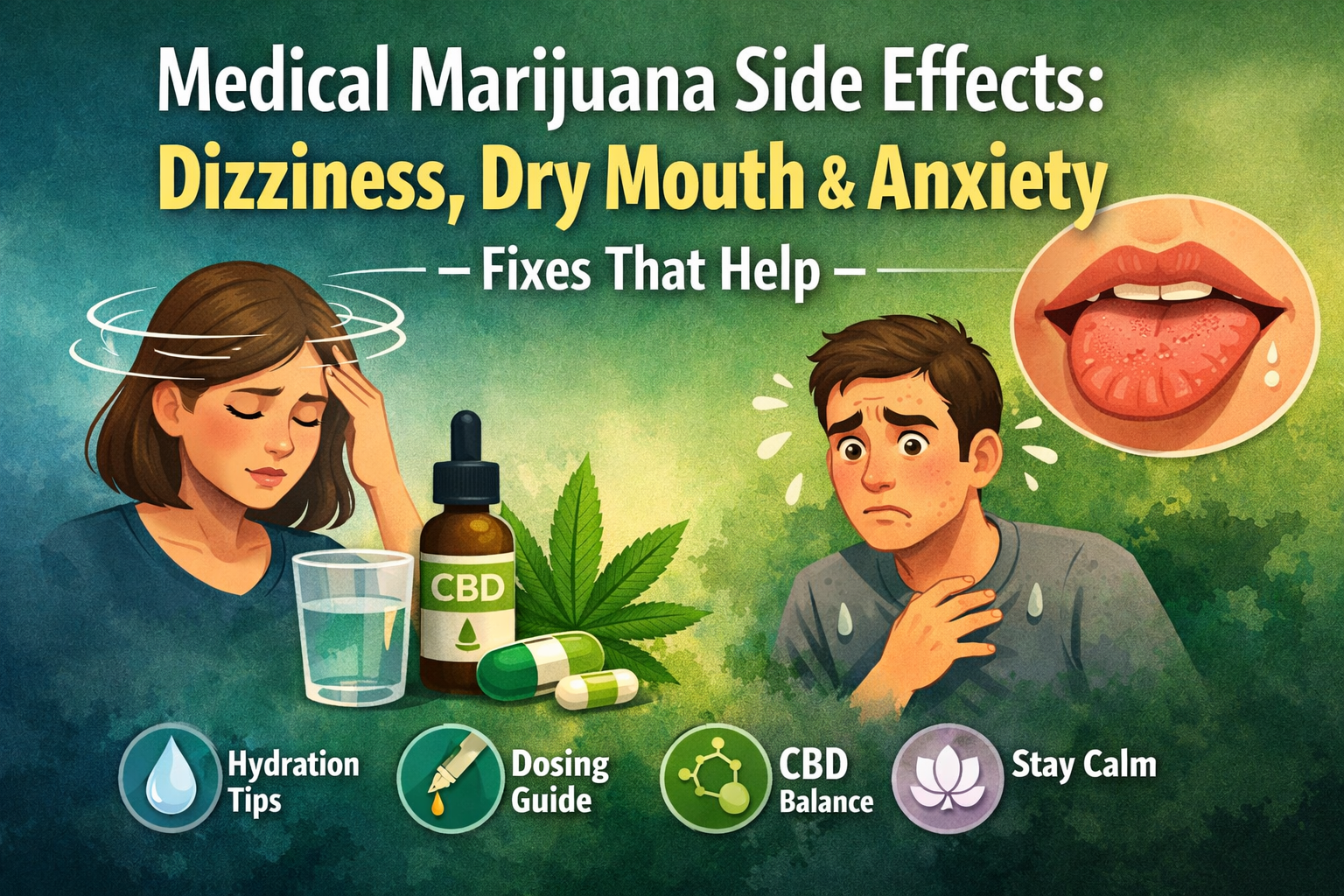
Medical Marijuana Side Effects: Dizziness, Dry Mouth, Anxiety — Fixes That Help
Medical marijuana helps many patients manage chronic pain, anxiety, insomnia, and other qualifying conditions. But like any treatment, cannabis can cause side effects—especially for new patients or those still learning proper dosing.
The most common issues patients report are dizziness, dry mouth, and anxiety. The good news? These effects are usually mild, temporary, and manageable with the right approach.
This guide breaks down why these side effects happen and—most importantly—what you can do to prevent or reduce them safely.
Why Medical Marijuana Causes Side Effects
Cannabis interacts with the body through the endocannabinoid system, which helps regulate balance, mood, appetite, blood pressure, and stress response. THC (tetrahydrocannabinol) and CBD (cannabidiol) affect this system differently, and individual tolerance varies widely.
According to the National Institute on Drug Abuse (NIDA), side effects often depend on:
- THC concentration
- Dosage size
- Method of consumption
- Individual sensitivity
Understanding how cannabis affects your body is the first step toward minimizing unwanted reactions.
Dizziness: Why It Happens & How to Fix It
Why cannabis causes dizziness
Dizziness is one of the most common side effects, especially after using THC-heavy products. THC can temporarily lower blood pressure, which may cause lightheadedness—particularly when standing up too quickly.
The Mayo Clinic notes that THC-related drops in blood pressure can lead to brief dizziness in some users.
👉 Source: Mayo Clinic – Marijuana Overview
Fixes that help
- Start low, go slow: Begin with the smallest effective dose
- Sit or lie down if dizziness starts
- Stay hydrated before and after use
- Avoid combining cannabis with alcohol
- Stand up slowly after sitting or lying down
💡 Pro tip: Dizziness is far more common in new patients and often fades as tolerance stabilizes.
Dry Mouth (Cottonmouth): Causes & Simple Relief
Why cannabis causes dry mouth
Cannabis affects receptors in the salivary glands, temporarily reducing saliva production. This leads to the classic “cottonmouth” feeling.
According to Harvard Health Publishing, dry mouth is one of the most frequently reported cannabis-related effects.
👉 Source: Harvard Health – Marijuana and the Body
Fixes that help
- Drink water before, during, and after use
- Use sugar-free gum or lozenges
- Avoid caffeine and alcohol, which worsen dryness
- Maintain good oral hygiene
- Use cannabis tinctures or capsules instead of smoking
💡 Pro tip: Dry mouth is uncomfortable—but not dangerous. Staying hydrated makes a huge difference.
Anxiety or Paranoia: What’s Really Going On?
Why cannabis can increase anxiety
THC affects the brain’s amygdala, which regulates fear and stress. In high doses, THC can overstimulate this region, leading to anxiety, racing thoughts, or paranoia—especially in patients sensitive to THC.
Research published by PubMed shows that THC can increase anxiety at higher doses, while lower doses may reduce it.
👉 Source: PubMed – Effects of THC on Anxiety
Fixes that help
- Lower your THC dose
- Choose CBD-dominant or balanced THC:CBD products
- Avoid edibles until tolerance is established
- Use calming terpenes like myrcene or linalool
- Practice slow breathing if anxiety starts
💡 Pro tip: CBD can help counteract THC-induced anxiety in many patients.
Choosing the Right Consumption Method
Different methods affect the body differently:
Method | Onset | Side Effect Risk |
Inhalation (smoking/vaping) | Fast | Higher dizziness risk |
Tinctures | Moderate | Easier dose control |
Capsules | Slow | Lower anxiety risk |
Edibles | Very slow | Higher overdose risk |
The Centers for Disease Control and Prevention (CDC) warns that edibles are a common cause of anxiety due to delayed onset and accidental overconsumption.
👉 Source: CDC – Marijuana and Public Health
💡 New patients should avoid edibles until they fully understand their tolerance.
How to Prevent Side Effects Before They Start
The best fix is prevention. Follow these simple rules:
- Start with the lowest possible dose
- Wait the full onset time before taking more
- Avoid mixing cannabis with alcohol
- Eat beforehand to reduce dizziness
- Track your response to different products
Most side effects occur when patients take too much, too fast.
When Side Effects Mean You Should Talk to a Doctor
Side effects are usually mild—but consult a medical professional if you experience:
- Persistent anxiety or panic attacks
- Fainting or severe dizziness
- Chest pain or irregular heartbeat
- Confusion lasting several hours
According to the U.S. Food & Drug Administration (FDA), patients using cannabis alongside other medications should always discuss potential interactions.
👉 Source: FDA – Cannabis and Cannabis-Derived Products
Final Thoughts: Cannabis Side Effects Are Manageable
Dizziness, dry mouth, and anxiety are common—but manageable—side effects of medical marijuana. With proper dosing, product selection, and patient education, most people can enjoy the benefits of cannabis without discomfort.
Medical marijuana works best when used intentionally, responsibly, and under medical guidance.
If you’re new to medical cannabis or struggling with side effects, consult a qualified medical marijuana provider to tailor treatment safely to your needs.